
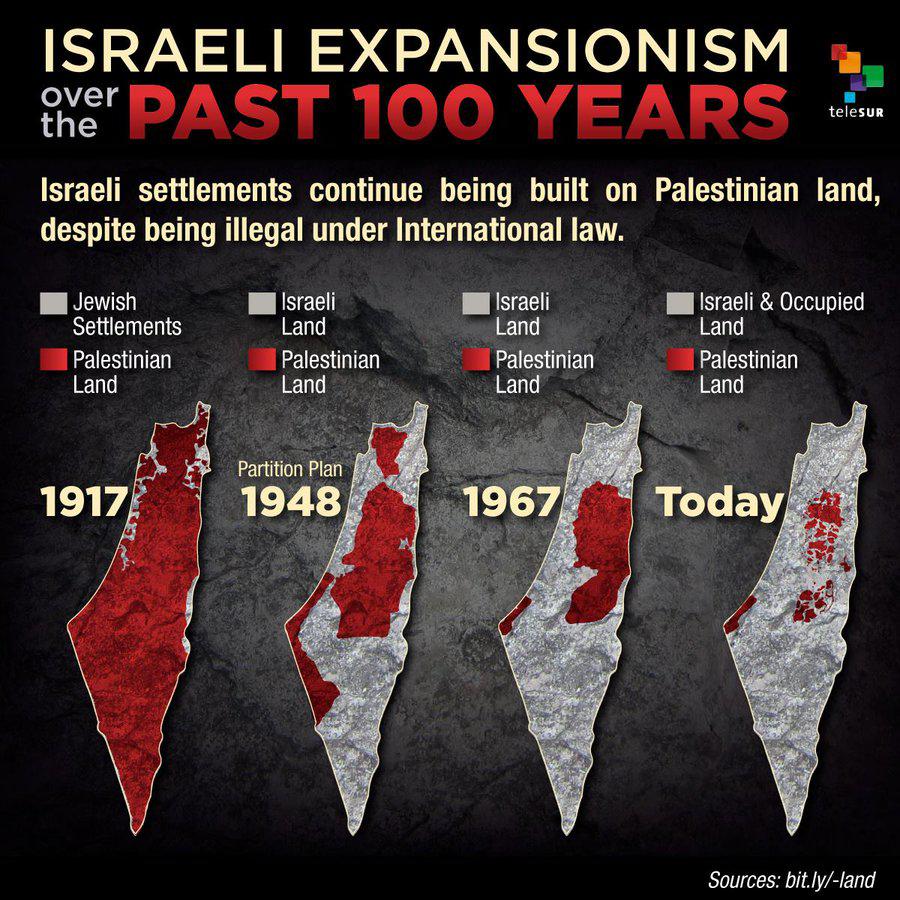
The Driver of the Palestinian-Israeli Conflict
In my opinion, a significant driver of the Israeli-Palestinian conflict stems from deeply rooted messianic beliefs held within Judaism, Islam, and Christianity—each of which attaches profound religious meaning to the land, particularly Jerusalem, and envisions its role in divine prophecy or end-times fulfillment. These theological convictions intensify territorial claims, shape political ideologies, and complicate efforts toward compromise or coexistence. — Conflicting Religious Myths —-
Timeline of the Region
Here’s a high-level timeline of key events in the Israeli–Palestinian region over the past century, capturing major turning points, wars, peace efforts, and political shifts: – Provided by MS Copilot based on https://www.ajc.org/IsraelConflictTimeline and https://education.cfr.org/learn/timeline/israeli-palestinian-conflict-timeline
Timeline: 1920s–2020s
1920s–1940s: British Mandate & Rising Tensions
- 1917: Balfour Declaration — Britain supports a “national home for the Jewish people” in Palestine
- 1920–1947: British Mandate over Palestine; increasing Jewish immigration and Arab resistance
- 1936–1939: Arab Revolt against British rule and Jewish immigration
- 1947: UN Partition Plan proposes separate Jewish and Arab states; Jerusalem under international control
1948–1967: Wars & Displacement
- 1948: Israel declares independence; Arab-Israeli War begins. Over 700,000 Palestinians flee or are expelled (Nakba)
- 1949: Armistice agreements signed; Israel gains territory beyond UN plan
- 1956: Suez Crisis — Israel, UK, and France attack Egypt over canal nationalization
- 1967: Six-Day War — Israel captures Gaza, West Bank, East Jerusalem, Sinai, and Golan Heights
1970s–1980s: Peace Attempts & Uprisings
- 1973: Yom Kippur War — Egypt and Syria attack Israel; ends in stalemate
- 1979: Camp David Accords — Egypt recognizes Israel; Sinai returned
- 1987–1993: First Intifada — Palestinian uprising against Israeli occupation
1990s: Oslo Accords & Hope for Peace
- 1993: Oslo I Accord — mutual recognition between Israel and PLO; roadmap for peace
- 1995: Oslo II Accord — expands Palestinian self-rule; Israeli PM Yitzhak Rabin assassinated
2000s: Second Intifada & Gaza Conflicts
- 2000–2005: Second Intifada — widespread violence and suicide bombings
- 2005: Israel withdraws from Gaza
- 2006: Hamas wins Palestinian elections; splits from Fatah
- 2008–2009: Gaza War — Israel launches Operation Cast Lead
2010s: Stalemates & Shifting Alliances
- 2012 & 2014: Major Gaza conflicts between Israel and Hamas
- 2017: U.S. recognizes Jerusalem as Israel’s capital
- 2020: Abraham Accords — Israel normalizes relations with UAE, Bahrain, Sudan, and Morocco
2020s: Escalation & Global Attention
- May 2021: 11-day war between Israel and Hamas; hundreds killed
- Oct 2023: Hamas launches surprise attack; Israel responds with major military operations in Gaza
- 2024–2025: Ongoing conflict, humanitarian crisis, and international calls for a ceasefire
Israel – Gaza War 2023
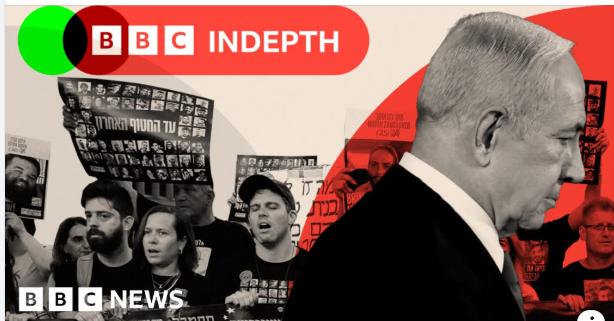
Jeremy Bowen’s “The divides within Israel over the war in Gaza,” explores the deep fractures within Israeli society concerning the ongoing conflict. It highlights Prime Minister Benjamin Netanyahu’s consistent message of total victory against Hamas, a stance rooted in the trauma of the October 7th attacks, which he likens to historical persecution of Jews.
However, there is significant dissent, with minority groups protesting Palestinian suffering in Gaza and a large segment of the population prioritizing the return of hostages over continued warfare.
In particular, this article contrasts secular Israelis’ desire for a ceasefire and Netanyahu’s resignation with the religious right’s view of the war as a divine opportunity to expand Israel’s borders and implement religious law. IMHO: the main problem
Bowen: Netanyahu is presiding over a divided Israel – the fault lines are now chasms
Gaza War Casualties & Impact
Updated Aug 19, 2025 Data: Gaza War Casualties & Impact
Casualties
- Palestinian deaths: ≥62,004
- Wounded: ≥156,230
- Israeli deaths (Oct 7, 2023): 1,139
- Journalists killed: ≥242
- Deaths while seeking food: ≥1,400
Structural & Humanitarian Damage
- Gaza under militarized control: 86.3%
- Cropland destroyed: 86%
- Children under 5 with acute malnutrition: ≥12,000
- UNRWA staff killed: ≥350
- Essential medicines unavailable: ~60% of stock depleted
Aid & Access
- Aid trucks stuck outside Gaza: ~6,000 waiting for entry
- Airdrops: 100× more costly than trucks, yet still used
- Evacuations: WHO evacuated 62 patients last week; 14,800 still need urgent medical transfer
Genocide in Gaza

The Cartography of Genocide Platform documents in unprecedented detail the extent and character of Israel’s assault on the Gaza Strip since October 2023.
The platform compiles evidence of thousands of acts of violence, destruction, or obstruction committed by the Israeli military against all aspects of civilian life in Gaza, including attacks on shelters, hospitals, universities, schools, cemeteries, archaeological sites, mosques and churches, fields and orchards, greenhouses, water wells, bakeries, and aid distribution. It also records Israel’s abuse of humanitarian measures such as evacuation orders and ‘safe zones’ as tools of population displacement.
Note: the Platform <button>, associated timeline slider, and the Patterns and Layers tab <buttons>.
Palestine Statehood
Worldwide Support
As of September 2025, 149 out of 193 UN member states have formally recognized the State of Palestine.
“Britain and France carry particular heft because they are permanent members of the U.N. Security Council, with the power to veto any substantive Council resolution, including on the admission of new member states. …
The two countries would be strengthening the stance taken by most other nations and sending a political message, but their shift would also have a practical effect. They would join China and Russia in recognizing a Palestinian state and leave the United States as the sole permanent member of the Security Council with veto power that is holding out.”
NY Times 7/29/25
US Position on Palestinian sovereignty
* 2002 – Explicit Endorsement: U.S. policy formally supported a Palestinian state alongside Israel, marking a shift from earlier ambiguity.
* Trump Administration (2017–2021): Shifted focus to economic incentives and normalization deals (Abraham Accords), sidelining Palestinian sovereignty. As part of the UAE-Israel deal, Israel agreed to temporarily halt its plans to annex parts of the occupied West Bank.
* 2025 – Current Position: The U.S. boycotted the recent UN summit on Palestinian statehood, opposing unilateral recognition efforts.
US Ambassador to Israel Mike Huckabee
In 2024, Mike Huckabee was nominated by Donald Trump to be the U.S. ambassador to Israel and was sworn in on April 9, 2025. During his Senate confirmation hearing, he openly discussed how his religious values inform his support for Israel.
- Christian Zionism: Huckabee is a staunch Christian Zionist, believing that the modern state of Israel is tied to biblical prophecy and the second coming of Jesus. This theological perspective, known as dispensational premillennialism, informs his political views on the Israeli-Palestinian conflict.
- Views on the Israeli-Palestinian conflict:
- Biblical mandate for land: Huckabee has written that Jews have a “God-given right” to reclaim the land given to their ancestors.
- Support for settlements: He supports Israeli settlements in the occupied West Bank, referring to the area by its biblical names, “Judea and Samaria,” and calling the settlements “communities” rather than an “occupation”.
- Denial of Palestinian identity: He has previously stated that “there’s really no such thing as a Palestinian” and has suggested that Palestinians could relocate to other countries.
- No two-state solution: Huckabee is opposed to a two-state solution for the Israeli-Palestinian conflict.
Hukabee holds a deranged worldview. He should never represent any position of power regarding Palestine.
Humanitarian Aid in Gaza

UNRWA – United Nations Relief and Works Agency for Palestine Refugees
Origins and Evolution
1949: UNRWA was created by the UN General Assembly following the 1948 Arab-Israeli war, to provide relief and development for Palestinian refugees displaced by the conflict.
1950s–2000s: The agency expanded its services to include education, healthcare, and social support across Gaza, the West Bank, Jordan, Lebanon, and Syria. Its definition of “refugee” uniquely includes descendants of original refugees, which has led to a growing population under its care.
2023: Gaza War and Catastrophic Losses
- October 7 Attacks: Hamas-led attacks on Israel triggered a massive Israeli military response in Gaza.
- UNRWA Casualties: Over 315 UNRWA staff were killed, and 300+ installations were damaged or destroyed.
- Accusations and Suspensions: Israel accused UNRWA staff of involvement in the attacks. Some donors temporarily suspended funding; most resumed after inconclusive investigations.
2024: Political Backlash and Legislative Bans
- Israeli Legislation: Israel passed laws banning UNRWA from operating in Gaza, West Bank, and East Jerusalem.
- Swiss Debate: Switzerland halved its donation and debated ending support entirely.
- Humanitarian Emergency: UNRWA faced unprecedented demand for aid amid displacement and infrastructure collapse.
2025: Strategic Assessment and Existential Threats
- UN80 Initiative: A major strategic assessment was commissioned by the UN Secretary-General to evaluate UNRWA’s future.
- Findings: The report emphasized UNRWA’s indispensable role in regional stability and refugee rights, but warned of political efforts to dismantle its mandate.
- Global Debate: UNRWA’s survival now hinges on member state decisions about its structure, funding, and political support.
Anti-semitism has an expansively evolving definition. Note: Canary Mission

Canary Mission documents individuals and organizations that promote hatred of the USA, Israel and Jews on North American college campuses and beyond. Canary Mission investigates hatred across the entire political spectrum, including the far right, far left and anti-Israel activists.
Anti-Zionism as a Form of Antisemitism and Christian Nationalism
In my opinion, anti-Zionism is not anti-Semitism.
Conflating anti-Zionism with antisemitism suppresses free speech, especially on college campuses pro-Palestinian protests. It misrepresents legitimate criticism of Israeli policy.
Deeming anti-Zionism anti-semitism fosters the false Christian Nationalists’ notion that the US was founded as a Christian nation and should remain so. That via the government, Christianity should influence laws and public policy, including education, marriage, morality, and, federal government should declare the U.S. a Christian Nation.
The U.S. Congress has increasingly taken the position that anti-Zionism is a form of antisemitism, especially in the wake of the October 7, 2023, Hamas attacks and the subsequent rise in antisemitic incidents across the U.S.
Congressional Resolutions and Legislation
House Resolution 894 (December 2023)
- Passed with a vote of 311–14, with 92 members voting “present”.
- The resolution explicitly stated that “anti-Zionism is antisemitism”, aligning with the International Holocaust Remembrance Alliance (IHRA) definition.
- It condemned all forms of antisemitism and reaffirmed support for the Jewish community globally.
Expanded Definition Bill (May 2024)
- The House passed a bill to codify the IHRA definition of antisemitism into Title VI of the Civil Rights Act, which would allow the Department of Education to restrict funding to universities perceived as tolerating antisemitism.
- This definition includes statements like “Israel is a racist endeavor” or comparisons between Israeli policy and Nazi Germany as examples of antisemitism.
Dissent and Debate
While the majority of Congress supports this framing, some lawmakers and civil liberties groups have pushed back:
- Critics argue that conflating anti-Zionism with antisemitism suppresses free speech, especially on college campuses where pro-Palestinian protests have surged.
- Lawmakers like Rep. Gerry Connolly (D-VA) and Rep. Cori Bush (D-MO) voted against the resolution, stating that it misrepresents legitimate criticism of Israeli policy and ignores threats like white nationalism.
?